The benefits of physical activity in children: why movement is essential to their development
Moving is essential to a child’s development because physical activity acts simultaneously on their body, their brain, and their emotions. 🏃♂️ It strengthens muscles and bones, stimulates concentration and memory, and helps manage stress while building self-confidence. For children, movement is therefore not just a pastime. It is a genuine pillar of growth, on par with nutrition or sleep.
In this article, discover why sport for children plays such an important role for young people, how much activity time is recommended by age, and how to naturally encourage them to move every day.
The physical benefits of physical activity in children
A child’s body develops progressively. Physical activity actively contributes to growth and muscular development, from the very first years of life.
Stronger muscle and bone development
Running, jumping, or climbing engages a child’s muscles and joints. These movements promote better bone density and stronger musculature. They also prepare the body to better withstand everyday falls and bumps.
A more resilient immune system
An active child generally falls ill less often. Physical exercise improves blood circulation and stimulates the body’s natural defenses. The body thus becomes more resistant to common childhood infections.
Prevention of childhood overweight and obesity
Movement helps regulate weight by balancing energy intake and expenditure. Combined with a balanced diet, regular physical activity is one of the best ways to prevent childhood overweight and obesity.
Better quality sleep
A child who expends energy during the day generally falls asleep more easily and enjoys more restorative sleep. Physical activity regulates the sleep-wake cycle and reduces nighttime awakenings, which directly benefits their growth and recovery.
The risks of a too-sedentary lifestyle
Conversely, a child who moves little accumulates several imbalances. Time spent sitting in front of a screen often replaces physical play, which can lead to postural issues or delays in motor development, or even unusual fatigue. Sedentary behavior also weakens sleep quality and encourages difficulty concentrating at school. This is why limiting prolonged sitting time matters just as much as multiplying opportunities to move.
The cognitive benefits of sport for children
Movement doesn’t just help the body grow. It also nourishes the brain. 🧠
Better concentration in class
Several studies show that children who engage in regular physical activity have more sustained attention in class. Sport promotes brain oxygenation, which improves memory and learning abilities.
Development of motor skills and coordination
Climbing, throwing a ball, or riding a bike allows a child to refine their hand-eye coordination and balance. These motor skills, acquired through play, later become solid foundations for many forms of learning, including handwriting.
The emotional and social benefits of movement
Moving also helps children get to know themselves better and live better with others.
Easier stress and emotion management
Physical activity releases endorphins, hormones that soothe and provide a sense of well-being. A child who moves regularly often manages their frustrations and anxiety better. Sport then becomes a genuine natural emotional outlet.
Building self-confidence
Succeeding at a new movement, progressing in a discipline, or simply feeling physically capable strengthens a child’s self-esteem. Every small sporting victory nourishes their confidence in their own abilities.
Learning to live together
Team sports teach respect for rules, team spirit, and how to handle failure. These values, learned on the playing field, later carry over into a child’s school and social life.
How much physical activity per day does a child need?
Recommendations vary by age. Here is a simple guide to help you get oriented. 👇
| Child’s age | Recommended activity time | Suggested type of activity |
|---|---|---|
| 1 to 4 years | Several times a day | Free play, walking, active movement |
| 5 to 12 years | At least 60 minutes a day | Cycling, group games, supervised sports |
| 13 to 17 years | At least 60 minutes a day | Structured sport, light muscle strengthening |
These durations don’t need to be continuous. They can be spread across several moments throughout the day, between commutes, recess, and evening activities.
These benchmarks are based on the recommendations of the World Health Organization (WHO), which advises at least 60 minutes of daily physical activity of moderate to vigorous intensity for children and adolescents aged 5 to 17, as well as several sessions of active play each day starting from early childhood.
The role of parents and schools in children’s physical activity
A child doesn’t build their movement habits alone. Their surroundings directly influence the place sport will hold in their life.
At home, parents remain the primary role model. A child who sees their parents walking, cycling, or simply playing outside will naturally want to imitate them more. Offering active family outings on weekends remains one of the most effective ways to establish a lasting routine.
At school, physical education complements this learning. It allows children to discover several disciplines, progress at their own pace, and develop team spirit in a structured setting. Recess and active after-school time also contribute, often without the child realizing it, to reaching the recommended 60 daily minutes.
Which physical activities to favor by age?
Not all activities suit every age. Here are a few ideas adapted to a child’s development.
- For toddlers (1 to 4 years): balance games, obstacle courses, dance, and simple ball games.
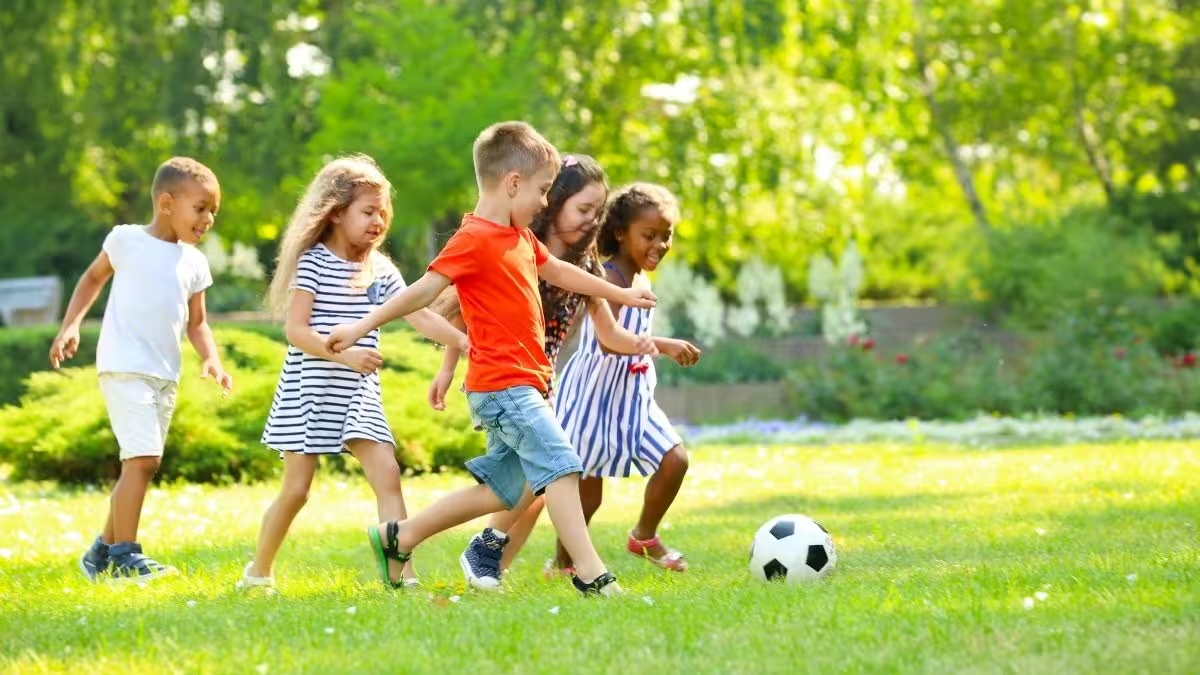
- For school-age children (5 to 12 years): swimming, cycling, team sports like soccer or basketball, motor skills workshops.
- For preteens and teenagers (13 to 17 years): structured club sports, running, independent activities such as riding a scooter or climbing.
How to encourage your child to move every day?
A few simple habits, worked into the family routine, are enough to build lasting good habits. ✨
- Favor walking or cycling over driving whenever possible.
- Limit screen time to make more room for physical play.
- Offer varied activities so the child can find the one they truly enjoy.
- Lead by example by practicing regular physical activity yourself.
- Turn everyday chores into a game, like tidying up to music or running to the park.
Frequently asked questions about physical activity in children
At what age can a child start a sport?
Most clubs welcome children from age 4 or 5, in the form of introductory sports programs or baby gym. Before this age, free play and family activities are more than enough to cover their movement needs.
Can sport replace screen time?
Sport doesn’t fully replace screens, but it helps rebalance a child’s day. The goal remains to limit prolonged sitting time and offer active, playful alternatives, without turning it into a strict ban.
How many times a week should a child do sport?
There’s no universal number of sessions. What matters most is reaching about 60 minutes of physical activity per day, spread between supervised sport, active commuting, and free play.
What if my child doesn’t like sport?
Some children don’t enjoy competition but love moving in other ways. Dancing, cycling, family hikes, or outdoor games remain excellent alternatives for staying active without going through traditional sport.
In summary
Physical activity supports children in every dimension of their development. It strengthens their body, stimulates their brain, and helps them build balanced social relationships. Rather than imposing a specific sport, the goal is above all to give children a love of movement, in a playful form suited to their age.
It’s this joy of moving, cultivated from an early age, that lays the foundation for an active, healthy life. 🌟 The best starting point is often the simplest one: offering a shared family physical activity today, without pressure or performance goals.